Embedded Files
I gained the enmity of Count von Rosen, at least for the following couple of years, since he continued attempts to derail my career in the IEAF from his position as Advisor. Two examples illustrate that my assumption could be valid. The first example happened in the summer of 1954. The ground forces division known as the Imperial Guard staged a show for the Emperor where air power was to soften an enemy’s fortification before ground forces overwhelmed it. As the sight of the enemy fortification they chose Tullu Dimtu; a hill situated a mile or so to the south of the Ambo road past Addis Alem and by the Berga River. The Emperor and his entourage would have a panoramic view of the show from a position on another hill nearby. A squadron, of three fights of four B-17As each or twelve dive-bombers in total, from Asmara lead by the same Capt. Negash W/Mikael, would participate in the exercise. Lt. Aseffa G/Igzy led the third flight of four airplanes where I was one of his pilots. The first day of our rehearsal was for the squadron to take-off from Asmara, make a simulated attach on Tullu Dimtu and land at the air force base at Harer-Meda in Bishoftu. On its southbound flight in our rainy season, as the squadron neared Ras-Dashan on the Semien Mountains, we encountered a wide weather front with cumulonimbus clouds hugging the rising grounds and rising to great heights. Capt. Negash signalled descent to below cloud level and started his lead flight on a shallow dive. His decision clearly demonstrated poor judgment. A formation operated by trainee pilots, or even experienced pilots for that matter, cannot traverse such a tropical front intact. However, the loose formation followed his lead on what appeared to me a very risky course, considering the rising ground elevation to the highest level of the Ethiopian plateau behind the weather front. Lt. Aseffa initially complied with the order and put our flight on a shallow dive too but, being at the tail end of the loose formation, we saw the formation ahead of us break up in disarray as they experienced the sever buffeting caused by the foul weather and so close to the rising grounds. Aseffa swiftly signalled and made a sharp climb and a right turn to bypass the towering cumulonimbus and we, the other three pilots, followed our flight leader with ease. He found a suitable saddle and took us above cloud to cross the front. It was clear that Capt. Negash had lost control of the formation from the communication chaos that erupted. Individually or in pairs, his eight pilots found their way back to Asmara, aborting the exercise. We were lucky not to have lost life and equipment through accidents. Lt. Aseffa’s flight completed the mission as originally planned. The other eight planes under Capt. Negash’s leadership lamely came to Harer-Meda a day later.
The irony was that instead of praising Aseffa for successfully completing the exercise, Capt. Negash accused him of disobedience and had an inquiry started immediately on his arrival in Bishoftu. The inquiry came to naught. As rehearsal for the show progressed, Count von Rosen became increasingly involved in its coordination and one day, while holding a briefing session, he provoked me into forcefully denying a false charge he made on an unrelated matter to the briefing. All officers and men of the squadron were standing, lined up in a hot and suffocating hall, for a briefing that was to last perhaps half an hour or less. Instead, the back and forth between Count von Rosen and I consumed some two hours in the midst of which Cadet Sergeant Kiflom Amdom who had probably spent a sleepless previous night collapsed and had to be carried out on a stretcher. Count von Rosen’s expatriate secretary was called in and took my statement which he theatrically flourished in front of us all present there as the evidence he would use to stop me from getting my commission. However, before signing the statement I had made certain that it would show him as a provocateur unfit for high leadership position and hence I was not worried. The statement had me say that I would not presume to tell the Emperor how to run the country but it also stated that he a ranking officer had called me a crook and an Al Capone without any justification. I do not know if he ever used the signed statement for the claimed ends but, a few months later, I earned my commission with my fellow cadets. Count von Rosen was a pioneer aviator and an idealist who gave his services to the underdog in times of armed conflict, as he did for Ethiopia when Fascist Italy invaded it in1935. He may even be a visionary but his practice of personal entanglements with lowly pilots in the narrated examples does not give credence to his talent in military administration.
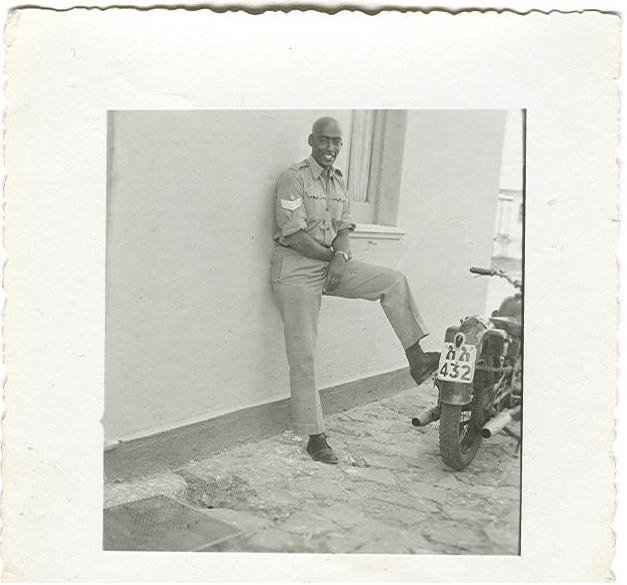
The second example happened in early 1955. Gen. Aseffa requested our wing commander Maj. Rinde to have me ferry from Asmara a Fairy Firefly fighter that was to undergo heavy maintenance in Bishoftu. As soon as I landed, Gen. Aseffa met me on the field and informed me that Point 4 of the USA was conducting tests countrywide to determine technical aptitude for study scholarship grants in the USA. Their team is now on the air force base just about to start the series of tests and that he thought I might try my luck. I immediately went over and walked in to the hall at the last minute, sporting my orange flying suit and a clean-shaven head. As the last person to enter the hall, I cannot forget the odd look that I received from the sole Ethiopian member of the team. A few days after the end of the tests, Gen. Aseffa drove me to the Head Office of Point 4 in Addis Ababa and introduced me to an American who shook my hand and congratulated me on being the top scorer in the country. To the delight of Gen. Aseffa, he also told us that the air force must have technically talented people since twelve of the fifteen top scorers are from its ranks. The US Point 4 granted the air force's top scorers’ scholarships to study engineering in the USA but Count von Rosen scuttled my dream scholarship by advising that, as a talented pilot, I am too useful in the air force’s command structure to waste by conversion to a technician. When I learnt of this development, I went to him seeking an explanation as to why he would take such a position after vowing just a while back to stop my advancement in the command structure. He confirmed his stand that flyers are most important but when I pointed out that, I may not be able to continue flying due to progressing short sightedness, which was true, he threatened me with a dishonourable discharge for falsehood. Dr. Tapavitza, our chief medical officer, put a stop to that line of action by confirming my claim. In the meantime, the scholarship was gone and I had started considering leaving the air force altogether, by any means, since I felt that the air force had dealt me an unfair hand. What Gen. Aseffa advised me, and did for me, now is the basis for my claim that he is responsible for my continued service in the IEAF and in a dual capacity of flyer and technical person at that. He advised me to stay put and promised he would create another opportunity for me, which he did within the year. As a result, apart from getting an Aeronautical Engineering degree from the Imperial College of London University and valuable knowledge of aircraft and systems maintenance at RAF Technical College, Henlow, I gained invaluable experience at the air forces mentioned earlier. I believe that the IEAF and the country too benefited in that almost all of us who went for higher studies continued to serve our country for decades with energy and dedication.
Page updated
Report abuse