Embedded Files
The US government received our request and eventually supplied a number of T-28Bs and F-5As but the going was not smooth sailing. While Kennedy’s administration was seeking political solutions determined to slow down the arms race in the region, Khrushchev’s Soviet Union was making inroads in Egypt, Somalia, Cuba, etc using local grievances to their advantage. Ethiopia, as an ally of the USA, watched the arms build-up on the other sides in its region and felt that the USA ought to provide much greater military support. A global political solution at Ethiopia’s cost seemed likely, as had happened in the colonial past and the government was determined to avoid such an outcome. Her Minister of Defence, Lieutenant General Merid Mengesha, made this assessment clear in no uncertain terms to the Ambassador of the USA, Mr. Corey, and arranged a discussion with Mr. McNamara, his US counterpart, for October 1962.
One day in early October, our Chief of Staff called me to his office and indicated I sit down in front of his desk while he was speaking on the phone. He was speaking with Gen. Merid. The two were comrades in arms since before the Italian invasion of 1935 and had also weathered the storm created by the attempted coup of the Body Guard Division less than two years earlier. I knew virtually nothing about Gen. Merid and hence was jolted to hear from their conversation that I was to be his air force advisor on his forthcoming crucial trip to the Pentagon. Gen. Aseffa enabled me to follow the conversation without disclosing my presence to Gen Merid who had never heard my name before. Gen. Merid wondered how a high-ranking officer could surface in the IEAF without his knowledge. He wished that someone he knew became his assistant, mentioning some officers in the IEAF. Gen. Aseffa persisted, to my discomfiture building me up in the process. After what seemed a reluctant acceptance, Gen. Merid asked for my full name and, when told, instantaneously connected me with my older brother Addamu Medhane who was flying as Captain for Ethiopian Airlines at the time but was notorious for rubbing officialdom the wrong way. Another round of explanation and persuasion ensued, at the end of which Gen. Merid accepted me. As regards his unorthodox method of this one way introduction, Gen. Aseffa said that he just wanted me to be prepared and how right he was.
I could not learn about Gen. Merid from Ethiopian sources for fear of word filtering back hence, I went to Ike seeking whatever brief the US has on him and he got them for me. Among the very useful facts gathered and assessments made on Gen. Merid, which proved vital in determining the kind of advice I was to render, I also learned that he was diabetic and even got access to pills that he was taking for it. Ike took risks in giving me information and advice regarding our possible approaches to the Pentagon but he was always certain that his actions were in the interest of his country. What made it easier was just that what we believed our air force needed was more or less in line with the defence strategy that the US advocated for us at the time.
Gen. Merid’s other assistants for the mission were Col. Gizaw Belayneh, representing the Ground Forces, and Col. Fikru ........, his Aide de Camp, the representative of the Navy not having turned up. Each one of us separately found our way to DC and met with our Minister of Defence at the Walter Reed Military Hospital where he had arrived some days before for a general health check-up. I guessed that there must have been treatment with observation because he received and discussed with us from his hospital bedroom through to and through the weekend of the first week of our three weeks stay. As the most senior of the three of us Col. Gizaw, later to become Chief of Staff of all Ethiopian Armed Forces as a Lieutenant General, became our spokes person in our dealings with both our Minister of Defence and the Pentagon conference organizers. I was lucky to have an officer who was fair and a gentleman take the frontline in the initial contacts with Gen. Merid since it gave me the opportunity to observe his reactions without having to intervene directly. From the moment we were introduced I remained in the background according to my lower rank and as it happened the very opposite of my brother Addamu. However, I would be forceful in putting forth my position among the three of us when we negotiate with the Pentagon assigned organizers. If the two higher ranking officers overruled me on any issue that required the consent of the minister, Col. Gizaw would without fail relate my dissent while explaining why we were recommending the specific course of action. These initial issues had nothing to do with our air force requests but with the overall negotiating tactics. Gen. Merid would ask of Col. Gizaw why the Major, referring to me in the third person, dissented and would be given a faithful and complete account of the position I took. To my surprise, Gen. Merid would consistently support the position I took and instruct us to proceed accordingly. Without uttering a word, I was getting nearer to Gen. Merid. As examples:
One issue was a two weeks delay of our meeting with Mr. McNamara by advancing a proposed tour of US bases across the country to take place before the appointment day. To this, I objected strenuously. Even though we knew that the Cuban missile crisis was brewing, disappearing on a junket to give them space can only weaken our position by turning us into guests while we in reality are negotiators on vital issues affecting the security of our country.
The three of us did not accept the proposed sites for visits unanimously. I did not want us to see the awesome nuclear offensive power of the US military. I argued against visiting the proposed strategic bomber bases and ballistic missile silos since they could not help us with our looming skirmish with Somalia, as they would never be used on our behalf. On the contrary such visits could lull us into relying on a well-meaning ally and not press hard on our mission at hand. For the air force, I wanted us to visit an experimental base for counter insurgency.
Gen. Merid met with Mr. McNamara the same day and just hours before President Kennedy announced the naval blockade of Cuba on national television. A most frightening point in history was that the US came nearest to using its nuclear power, with unimaginable consequences for the entire world, while we were there discussing the problem of Soviet backed Somalia. The visits to the bases took place after we accomplished our mission but we did not visit the base I had requested for the air force. Instead, we visited Williams AFB near Phoenix, AZ. In respect of this change, Gen. Merid was delighted, probably giving me more credit than I deserved for identifying what we needed to see. But, I was happy that I might get the opportunity to show him the Northrop T-38 Talon that was being operated out of that USAFB as it was a forerunner of the Northrop F-5 Freedom Fighter which we had just requested and obtained a positive response.
H.E. Ketema Yifru, the Minister for Foreign Affairs of Ethiopia, accompanied by Ayele Moltotal, his assistant, visited Gen. Merid during the weekend while Gen. Merid was still at Walter Reed. He came from New York City, where he was attending the UN General Assembly. Although they were my seniors, both visitors were high-school friends of mine, Ayele starting from primary school. Their easy familiarity with me, while I stood rather stiffly in his presence, must have intrigued Gen. Merid. Ketema first assured himself of Gen. Merid’s health then, with his great ability to break barriers, perched himself on the reclining hospital bed and started chatting about domestic and international matters. Invariably, as the conversation veered to the upcoming discussions at the Pentagon, he would offer advice and give much needed encouragement. Spontaneously, Gen. Merid suggested that they meet Mr. McNamara together on the coming Monday, also to give him a hand with his inadequate English. Ketema declined on grounds that he is scheduled to give Ethiopia’s position on that day at the UN General Assembly and added that in so far as English language is concerned, how can he ask for help with Semret at his disposal. Or, does he not know the talent at his disposal? With that remark, he broke the ice between Gen. Merid and I. For the first time, Gen. Merid spoke to me directly asking if I could handle it. I just said that I would try my best.
For a couple of days after Ketema’s departure, he started asking me directly about our air-force proposal to the US. How we arrived at certain conclusions. Is not having a base so far out and near enemy territory inherently insecure and difficult to service? Why not ask for bigger craft than the F-5 and T-28, in light of the grave danger facing the country. Discussion of such topics gave me the opportunity to better define the primary goal of IEAF, the most pressing being to stop the enemies’ ground offensives at least on two fronts, and how, for a given resource-allocation, bigger aircraft in size and less in number would be less effective to achieve this goal. Further, if a political solution for the conflict becomes a reality, that the investment on the ground for airports in developing areas would have a substantial residual value compared to zero residual value of the respective investment in bigger aircraft. Besides, the US would be more amenable to granting the requests of parties whose military has concern for economic development and Ethiopia’s current resources did not permit the luxury of bombers. Permission to speak freely granted, and dispensing with the stiffness that usually accompanies exchanges with junior officers, all four of us started frank discussions about the Pentagon of the New Frontier and how best to approach them to get what we needed. For example, we had him throw out our navy’s request for a coastal-gun, as it would water down our position in the negotiations without, in a meaningful way, improving the country’s defences. I pressed for the need to bring awareness to the Pentagon of our determination to make the country’s economic development a secondary role of our armed forces. Gen. Merid made us comfortable by listening and participating in discussing each topic to arrive at consensus rather than throwing his high rank at us.
The visit to the Pentagon started with a ceremonial brass band, a twenty-one-gun salute and an inspection of the guards by Mr. McNamara and Gen. Merid. I was surprised by their adherence to protocol, especially with the looming world crisis on hand. As soon as we sat around the conference table, Mr. McNamara asked Gen Merid “Your Excellency, what are the most important economic resources of your country”. As I started translating to Gen. Merid, who perfectly knew what the question was, I noticed a slight surprise in Mr. McNamara’s expression, as he must have not expected to conduct the discussion through a translator. However, I was happy that we had reviewed such a scenario a couple of days before and that a pause for interpretation was giving us an edge in delivering the right answers. As our eyes met, I could also tell that Gen. Merid appreciated our earlier review exercise. Gen. Merid responded by explaining that agriculture is the mainstay of the economy at present. He described the resources in the ground that are currently being exploited, as well as those that can be extracted in the future. But, he stressed that the real resource of the country are its people who are demonstrating their capacity to industrialize and their traditional cultures that are assets to excel in service industries. As I translated, I could see that Mr. McNamara was pleasantly impressed. Perhaps, the person did not quite fit the description in the briefing he msut have received. In the hour plus time span the talks continued, the nearest we came to discuss our request for military hardware was a mention of the threat being faced. Gen Merid was at pains to bring to the fore that a super-power, enemy of the US, was heavily arming our insignificant neighbour, which has territorial claims on Ethiopian. Assuring us of his support and delegating Mr. Bundy, brother to the then National Security Advisor, to discuss all issues with us, Mr. McNamara left. We learnt later that he went for a meeting with President Kennedy, immediately after which the president declared a naval blockade of Cuba as well as escalating the readiness of US armed forces and nuclear strike posture to the highest level ever recorded.
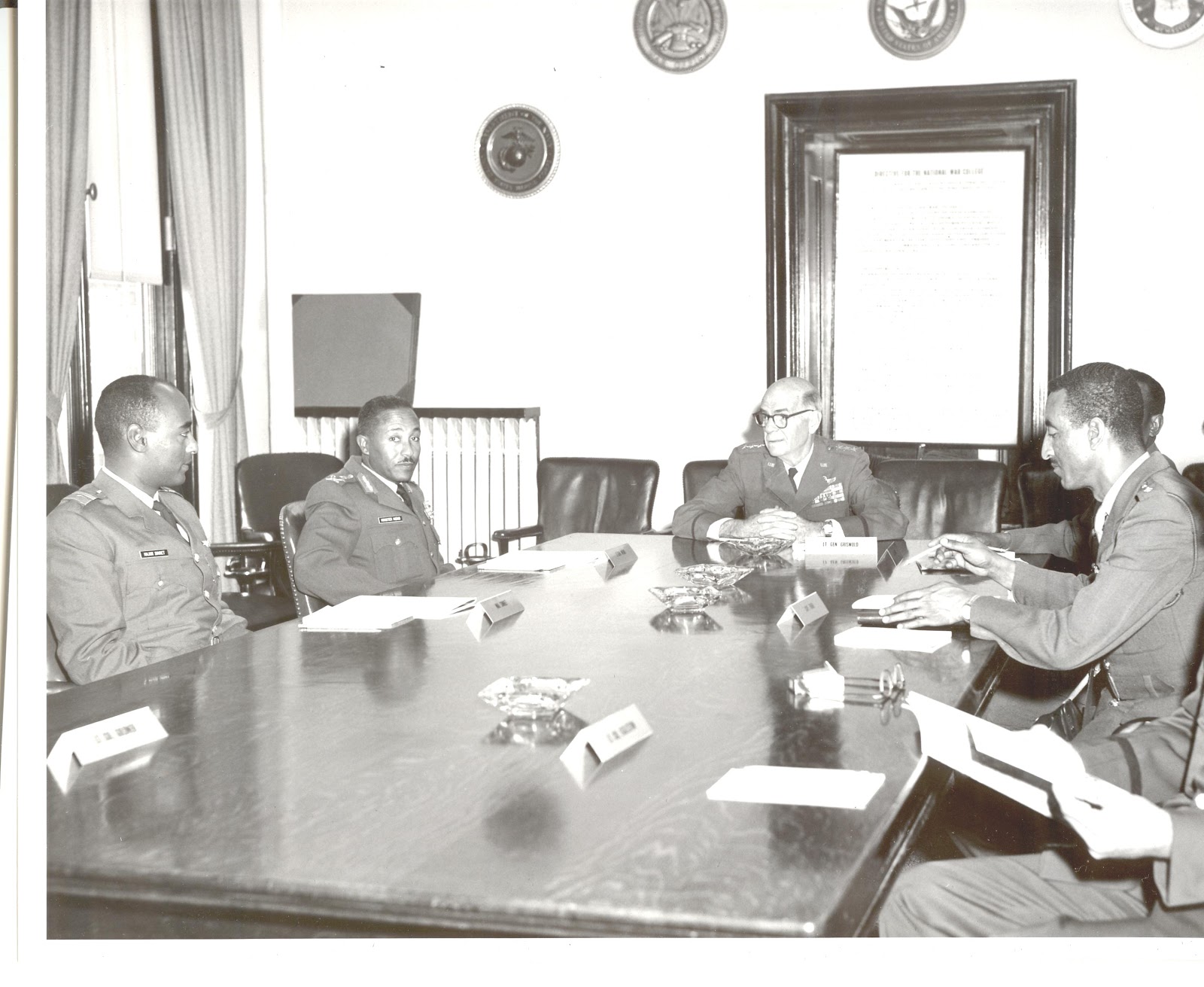
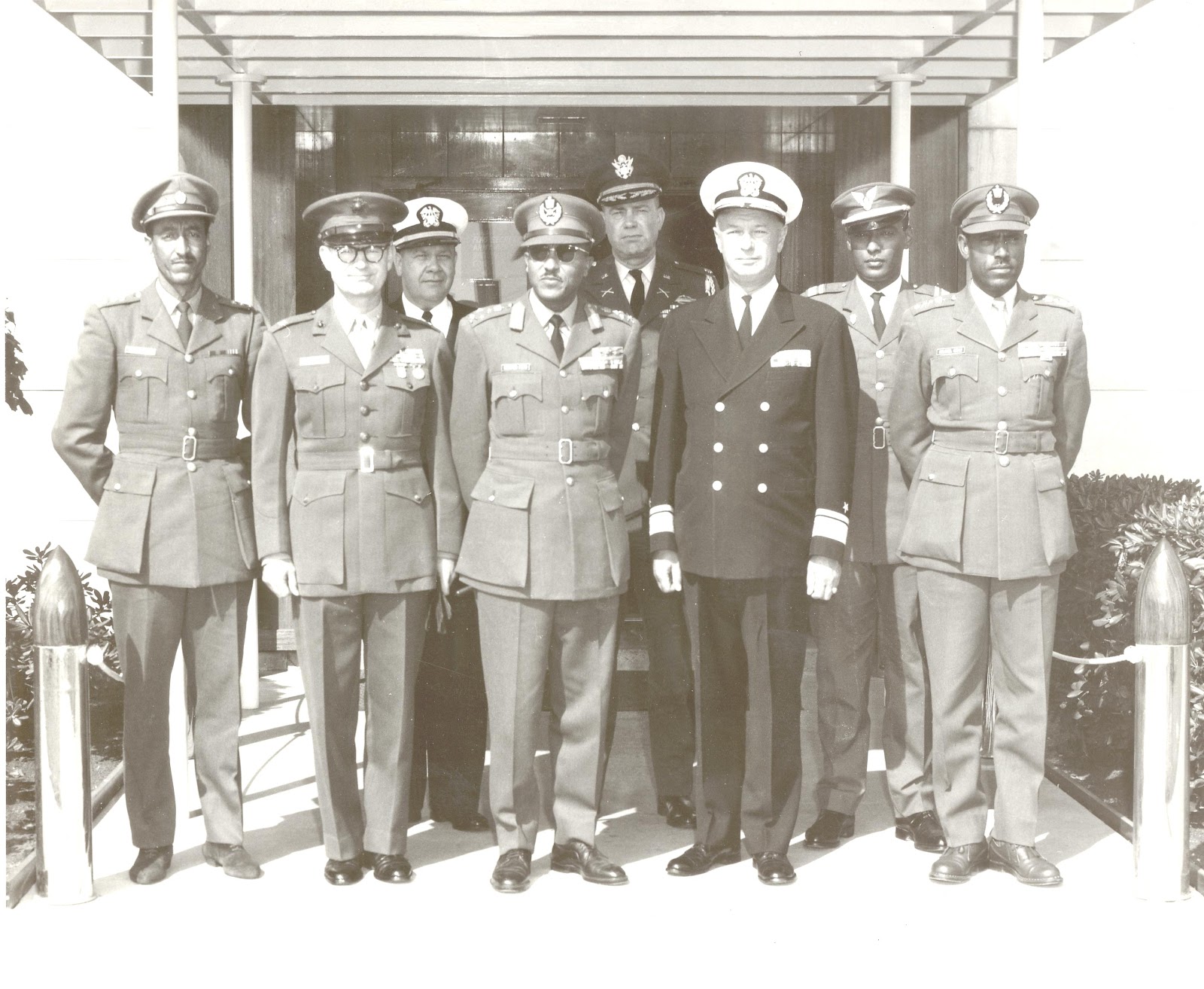
During the following days, Mr. Bundy, in the presence of high-ranking US officers that included a four-star general and Gen. Tolson the head of MAAG for Ethiopia, discussed our submissions in detail. We could not help but notice that the military sat quietly listening but did not intervene in any way. I felt that they were sympathetic to our side as we pointed out the vast imbalance in military hardware the Soviet Union was building in the region. Mr. Bundy’s position was that with an ally as powerful as the US committed to intervene, we should not worry. At one point Gen. Merid was so charged up that either forgetting he knew no English or dissatisfied with my unemotionally transmitted translations spoke out forcefully that no sovereign country would rely absolutely on an ally when it comes to its national security. If necessary, he said, Ethiopia should take unprecedented steps, including lease or sale of territory, to arm itself against this threat. That outburst in imperfect English was, I believe, the turning point in the discussions. As far as the IEAF was concerned, we received T-28Bs, that were actually were on a ship bound for Vietnam at the time, and F-5As, as they rolled off their production line at Norththrop a year and half later. We headed off to the prearranged visits of US bases as soon as we satisfactorily concluded our talks, at least from the air force point of view, at the Pentagon. We flew overnight from Washington, DC to William’s USAFB near Phoenix, AZ in a Convair 240, a twin engines liner similar to what Ethiopian Airlines operated as its prime aircraft in the early fifties. William’s was my choice, although of 2nd preference, and I wanted to fly the Talon to try and give credibility to my assertion that the Freedom Fighter was the best fighter for the IEAF. As it happened, the plane was in VIP configuration with lounge, dining and sleeping sections. The US officer who was taking care of us on the trip had gone to the rear of the plane and the purser had finished serving dinner to us four sitting at the dinner table when the handling of our luggage before take-off caused great distress to Gen. Merid. The few suitcases we had, including the one that contained his medication, were all in the hold requiring a landing of the plane to get to their contents. He was furious and certainly not amenable to asking for an unscheduled landing. Probably, his wariness of me vanished when what I carried in my breast-pocket proved to be what he needed and it avoided a minor embarrassment. From then on, and upon learning that I was not diabetic, he would persuade me to eat his dessert on informal occasions. When we parted at the end of the mission to go our separate ways to Ethiopia, he told me that he would be disappointed if I failed to call on him when I come to Addis Ababa on weekends. Assuming that these parting words were just gesture of goodwill, I never called on him. In fact, the last and only time that I met him before his untimely and sudden death several years later was a few months later in early 1963 on a weekend at Ambo, when Ambo was a popular resort destination. He was at a table chatting with Kegnazmatch Wolde-Amanuel, an acquaintance of my father and my brother Addamu’s father-in-law, at the far end of the restaurant from me. While I tried to be as inconspicuous as possible, he hailed me over and jokingly chided me for not living up to his expectation. I have often wondered regarding the section in the brief the US had of him that identified him as a person able of staging a successful coup despite his sanguinary relation with HIM H-S. He was intelligent and trusting, a good listener with courage to act adversarial but perhaps too kind to act against deviant friends and relatives. I truly regretted his passing.
Page updated
Report abuse